
What You Need to Know About Florida’s Vehicle Inspections: Department of Highway Safety and Motor Vehicles
Moving to Florida or registering your car here? When it comes to the topic of vehicular inspections, Florida is unique as compared to other states. You won’t need annual safety or emissions tests on most privately owned vehicles; but you shouldn’t ignore inspections altogether.
Our guide will walk you through exactly when Florida checks your car, who performs those checks, and why voluntary inspections are needed for your safety on the road.
Key Takeaways
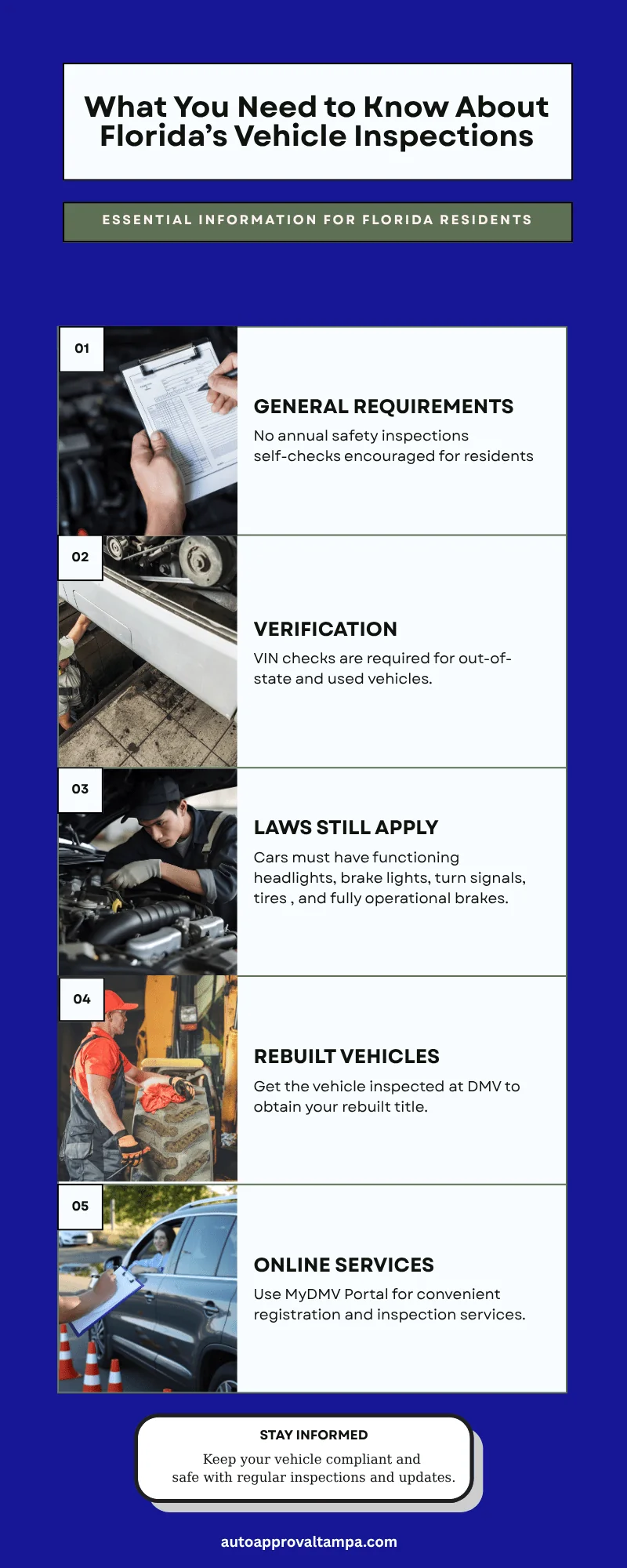
- Florida eliminates routine safety and emissions tests by 2000.
- Mandatory one-time VIN verification when an out-of-state vehicle is being titled in Florida.
- Salvage or rebuilt cars require a special inspection before you drive them.
- Voluntary mechanic checks and maintenance protect your safety and wallet.
- Florida’s heat and humidity accelerate wear.
No Routine Safety or Emissions Tests
While Florida no longer requires routine vehicle inspections, other states have different requirements. In many states, especially in the Northeast, regular safety and emissions testing is still mandatory. Regulations can vary significantly between states, so it’s important to be acquainted with the specific laws if you move or travel with your vehicle.
Around 1981, Florida ended annual safety inspections. Towards the 1990s limited emissions-testing program was kicked off. In the year 2000 the state abandoned emissions tests entirely.
Why inspections went away
Florida eliminated vehicle inspections in 2000 due to political and financial factors. State leaders viewed inspections as an unnecessary burden on motorists and resources, especially since air pollution had improved.
Governor Jeb Bush called the program costly and unfriendly to consumers, noting drivers were happy to avoid inspections. By removing these inspection requirements, Florida became one of the few states without annual safety or emissions tests. However, Florida law still mandates vehicle owners maintain essential safety features, like the braking system, allowing law enforcement to ticket drivers for violations that could cause car accidents.
But equipment laws still apply
Absence of mandatory vehicle inspections do not equate to an absence of laws. Florida mandates that vehicles adhere to specific safety regulations. Cars must have functioning headlights, brake lights, turn signals, tires with adequate tread, and fully operational brakes. Additionally, tampering with or removing factory-installed emissions controls remains illegal. Vehicles producing noticeable smoke for more than five seconds can also face hefty fines.
Drivers should regularly check their vehicle’s condition to avoid citations from law enforcement officers. Maintaining these basic safety standards helps keep the roads safe for everyone.
One-Time VIN Inspection for Out-of-State Cars
Florida requires a Vehicle Identification Number (VIN) verification for any vehicle brought into the state from elsewhere. This inspection confirms that the vehicle identification matches the paperwork provided. It prevents fraud and stolen vehicle registrations.
To complete this process, vehicle owners must fill out Florida HSMV Form 82042 and have their VIN physically checked by an authorized individual. Authorized inspectors include law enforcement officers, Florida DMV compliance examiners, licensed car dealers, and certified Florida notaries. After this step, you can proceed with titling and registration. Without this verification, Florida will not issue your vehicle’s registration or title.
Special Inspections for Salvage and Rebuilt Vehicles
If your car carries a salvage or rebuilt title, it needs an extra check to prove it’s safe to drive. These inspections are required for the protection of drivers, passengers, and the community. Here is how you can get it done.
Schedule an inspection at a DMV regional office or a licensed private facility. Pass a detailed safety exam covering repairs, frame integrity, and critical systems. Obtain your rebuilt title. After that, you are permitted to legally operate the vehicle.
Where to Get a Vehicle Inspection
It goes without saying that making sure your car is safe and road-ready should still be a top priority. Regular vehicle inspections help prevent costly repairs, promote highway safety, and protect all road users your family and children.
There are several great options across the state to get your vehicle checked. Many local shops in your city offer comprehensive car inspection services, from routine maintenance to more detailed checks of critical components like brakes, tires, and lights. Choose a facility equipped with skilled technicians.
For added peace of mind, you can use the AAA Approved Auto Repair Locator tool. Simply enter your city, state, or postal code to find a reputable shop near you. These facilities are known for their high standards, quality parts, and commitment to customer service. They can assist with everything from oil changes and tire rotations to more extensive inspections and repairs.
While Florida does not require emissions testing, there are shops still offer this service. Having your emissions system checked can help you catch potential issues early. The Florida Attorney General insist upon having a vehicle inspected by an independent mechanic before you buy it.
If you need help finding a facility or understanding the importance of regular vehicle inspections, the Florida Department of Highway Safety and Motor Vehicles is a valuable resource. Their website provides up-to-date information on inspection requirements, registering your vehicle, and tips for keeping your car in top condition. You can also contact them directly for assistance or to schedule an appointment.
Don’t wait for a minor issue to become a major problem. Act before it is too late!
Why Voluntary Inspections and Maintenance Matter

With no yearly state-mandated inspections, your car’s condition is up to you. We understand the importance of vehicle maintenance and safety for Florida drivers, so we recommend that you conduct regular checks to keep your vehicle in top shape:
Before you buy a used vehicle
- Insist on a pre-purchase check by an independent mechanic.
- Choose a reputable mechanic or shop to conduct the inspection for peace of mind.
- Have them inspect engine, transmission, brakes, suspension, tires, and electronics.
- If a seller refuses, walk away – it’s a red flag.
Ongoing maintenance
Florida’s climate presents unique challenges for vehicle maintenance. High temperatures, humidity, and intense sunlight can significantly impact car components, leading to quicker deterioration. Regular preventive maintenance helps offset these effects.

Heat quickens wear on batteries and tires, making regular checks crucial. Fluids such as engine oil and coolant evaporate more quickly in hot weather, increasing the risk of overheating if not monitored. Regular checks and maintenance of your vehicle’s air conditioning system also become important for comfort and safety.
Additionally, Florida’s frequent rains make windshield wiper and tire maintenance vital. Maintaining proper tire pressure and adequate tread ensures safer driving in wet conditions.
Florida’s Climate: Extra Care Required
Florida – the sunshine state- offers abundant heat, sunlight, and humidity, which accelerate wear on vehicle components, making routine inspections essential for every car owner.
- Tires & brakes: High temperatures and wet roads demand proper tread depth and brake inspections.
- Battery health: Heat shortens battery life – check it twice a year.
- Fluids & cooling: Monitor oil and coolant levels more often to avoid overheating.
- AC & interior: Service your air-conditioning system to stay comfortable (and safe) when temperatures peak.
- UV damage: Sunlight can crack and fade rubber parts, dashboards, and wiper blades – inspect them regularly.
Stay Safe, Stay Compliant
Florida doesn’t require yearly safety or emissions tests, but basic equipment laws still apply and skipping inspections can cost you in fines, repairs, or safety. Remember to:
- Complete your one-time VIN verification.
- Get specialized checks for salvage or rebuilt titles.
- Schedule voluntary mechanic inspections at least once a year (or every 12,000 miles).
- Adjust your maintenance routine for Florida’s unique climate.
- Verify the vehicle conditions while buying used cars
Care for your car to enjoy peace of mind, avoid unexpected expenses, and help keep Florida’s roads safer for everyone. All road users need to work in unison towards the safety on Florida’s roadways. For forms and more information, visit the Florida Department of Highway Safety and Motor Vehicles website.